Leave Your Message

How to Choose the Best Spray Sprinkler in 2026?

Choosing the best Spray Sprinkler in 2026 requires more than comparing prices or counting spray patterns. A reliable choice begins with the landscape itself. Measure the planting area, water pressure, soil type, and local climate before opening a product page. A small garden bed may need gentle, close-range coverage. A broad lawn may require adjustable arcs and stronger distribution.

Recent models offer pressure regulation, interchangeable nozzles, clog-resistant filters, and improved water efficiency. However, smart features do not automatically create better irrigation. A timer cannot correct poor placement. A durable nozzle cannot compensate for weak water pressure. Real performance still depends on correct installation and regular inspection.

Small details matter.

Look for clear flow-rate data, spray radius, operating pressure, material quality, and warranty terms. Product claims should be checked against manufacturer specifications and, where possible, independent testing. Experienced installers also recommend observing the spray during operation. Watch for dry corners, misting, runoff, or water striking nearby walls. These visible clues often reveal problems that a catalog cannot show.

There is no universal “best” Spray Sprinkler. That phrase sounds useful, but it oversimplifies real landscapes. A model that performs well in sandy soil may struggle in compact clay. Even a carefully selected system may need seasonal adjustment. This guide examines practical selection criteria, installation concerns, maintenance habits, and emerging 2026 features. It also questions common buying assumptions, because efficient irrigation depends on evidence, not attractive packaging alone.
How to Choose the Best Spray Sprinkler in 2026?

What Is a Spray Sprinkler and How Does It Work?

A spray sprinkler is a fixed irrigation device that distributes water through a shaped nozzle. It usually covers a small or irregular planting area. Unlike a rotor, it sprays continuously across its designed pattern. Water enters the sprinkler body under pressure and exits through the nozzle opening. The nozzle controls distance, arc, and flow rate. Small details matter.

In practical installations, the sprinkler may rise from underground when irrigation starts. A spring then retracts it after the cycle ends. A filter helps prevent grit from blocking the nozzle, while a pressure regulator can reduce misting. Too much pressure wastes water and creates uneven coverage. Too little pressure leaves dry edges. Wind changes everything. Even a well-designed pattern can drift on an exposed lawn.

When choosing a spray sprinkler in 2026, check the nozzle’s flow, radius, and adjustable arc. Match its precipitation rate with neighboring sprinklers so each area receives similar water. Head-to-head spacing often improves uniformity, but site shape and soil still matter.

I once focused too much on spray distance and overlooked drainage near a walkway. That mistake caused puddling. It also showed why field testing matters more than a specification sheet alone. Observe the spray during operation, measure wet areas, and adjust the layout when necessary. Smart controllers can improve scheduling, but they cannot repair poor spacing, clogged nozzles, or unsuitable pressure.
Which Spray Sprinkler Types Suit Different Irrigation Needs?

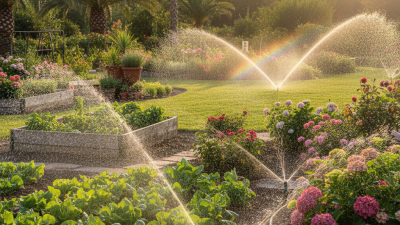
Choosing the right spray sprinkler starts with the shape of your irrigation area. Fixed spray sprinklers suit small lawns, narrow borders, and closely planted flower beds. They release a steady fan of water, but their fine droplets can drift in strong wind. Use them during calmer hours.

Rotary spray sprinklers work better for larger spaces and longer distances. Their rotating streams usually apply water more slowly than fixed sprays, which can reduce runoff on compacted or sloped soil. I have found them useful near young trees and broad lawn sections. However, they may perform poorly when water pressure is low. That detail is easy to miss.

Strip-pattern sprinklers fit narrow rectangles beside paths or walls. Adjustable arc models help when planting beds have irregular edges. For containers, seedlings, and delicate vegetables, micro-spray heads provide gentler coverage and allow closer placement. They still need regular inspection. A blocked filter can create a dry corner without obvious warning.

Before choosing, measure the area and check the available pressure. Select overlapping coverage, not excessive overlap, because too much water can encourage shallow roots and fungal problems. Soil also matters. Sandy soil needs shorter, more frequent cycles, while clay soil needs slower application. I once selected a sprinkler by distance alone and overlooked wind exposure. The far edge stayed dry. A better choice would have used lower-angle sprays and separate watering zones.

How to Choose the Best Spray Sprinkler in 2026? - Which Spray Sprinkler Types Suit Different Irrigation Needs?

Spray Sprinkler Type Typical Spray Radius Typical Operating Pressure Best Irrigation Applications Suitable Soil and Terrain Water Distribution and Efficiency Main Advantages Important Selection Notes
Fixed-Spray Sprinkler 1.5–5 m 2.0–3.5 bar Small lawns, flower beds, narrow planting strips, and residential landscape zones. Level or gently sloped areas with medium or sandy-loam soil. Provides a consistent fan-shaped pattern, but the relatively high application rate can cause runoff on compacted or clay soil. Simple layout, predictable coverage, and easy adjustment for small areas. Match the spray pattern to the area shape and avoid placing it where spray can reach walls, paths, or buildings.
Adjustable-Spray Sprinkler 1.5–5 m 2.0–3.5 bar Irregular garden beds, corner areas, and landscapes requiring partial-circle or custom arc coverage. Small zones with changing boundaries; best on level ground. Coverage can be directed accurately, reducing overspray when properly adjusted. Flexible arc control and good suitability for unusual planting layouts. Check the adjusted radius and arc regularly because excessive reduction may produce uneven distribution.
Rotary Spray Nozzle 4–8 m 2.1–3.5 bar Medium-sized lawns, mixed landscape areas, and retrofit projects using standard pop-up bodies. Loam, sandy loam, and moderate slopes when matched with an appropriate cycle time. Rotating streams usually apply water more slowly and uniformly than conventional fixed sprays, helping reduce runoff. Lower precipitation rate, improved uniformity, and reduced misting in suitable pressure conditions. Do not mix with conventional fixed sprays in the same zone unless their application rates are hydraulically compatible.
Bubbler Sprinkler 0.3–1.5 m 1.0–2.5 bar Individual trees, shrubs, planter boxes, and small root zones. Deep, localized soil areas; useful where broad spray would wet paving or walls. Delivers a concentrated flow near the plant base rather than broad overhead coverage. Efficient for isolated plants and easy to control within small planting basins. Use a pressure regulator or flow control where needed, and provide drainage to prevent ponding.
Micro-Spray Sprinkler 1–4 m 1.0–2.5 bar Nurseries, greenhouse benches, shrub beds, ground cover, and closely planted ornamental areas. Fine-textured beds and protected areas with low wind exposure. Produces a gentle, localized spray with relatively low flow; wind can significantly affect fine droplets. Low water use, flexible coverage, and suitability for delicate plants. Install filters and inspect emitters frequently because small passages are vulnerable to clogging.
Impact Sprinkler 8–20 m 2.8–5.5 bar Large lawns, sports fields, open agricultural plots, and areas requiring long throw distances. Open, relatively level sites; performs well in medium and heavier soils when runoff is managed. Robust long-range coverage, although wind can distort the pattern and high application rates may require cycle-and-soak scheduling. Long throw, durable mechanical operation, and broad coverage for large open areas. Allow adequate spacing between sprinklers and avoid operation during strong winds.
Gear-Drive Rotary Sprinkler 6–15 m 2.8–4.5 bar Medium to large lawns, parks, public green spaces, and rectangular turf zones. Level or gently sloped turf with medium to heavy soil. Rotating streams generally provide a lower application rate than fixed sprays, supporting longer soak times and reduced runoff. Quiet operation, adjustable arcs, and efficient coverage for larger turf areas. Use head-to-head spacing where practical and verify that the available pressure meets the nozzle specification.
Low-Precipitation Spray Sprinkler 2–6 m 2.0–3.5 bar Clay soils, compacted lawns, sloped landscapes, and zones with runoff concerns. Fine-textured soil and moderate slopes where water must infiltrate slowly. Applies water more slowly than standard spray heads, improving infiltration and reducing surface flow. Better control of runoff and puddling while retaining the compact size of a spray head. Longer run times may be required; use multiple shorter cycles if the soil cannot absorb the full application at once.
Mist or Fog Sprinkler 0.5–2 m 1.5–3.0 bar Propagation areas, greenhouse humidity control, and specialized cooling applications. Protected environments with limited air movement. Creates very small droplets that can evaporate or drift easily, making outdoor landscape use less water-efficient. Fine coverage and rapid humidity or temperature response in controlled environments. Avoid windy outdoor conditions and use filtration to reduce nozzle blockage.
Strip-Pattern Sprinkler 1.5–5 m 2.0–3.5 bar Narrow roadside verges, rectangular planting strips, and long garden borders. Level, narrow beds where overspray must be limited. Directs water into a narrow rectangular pattern, improving control in confined spaces. Efficient use of water in long, narrow zones and reduced wetting of adjacent hardscape. Install according to the specified left-strip, right-strip, or end-strip pattern and maintain adequate overlap.

Data note: Performance ranges are typical planning values for general irrigation design. Actual radius, flow rate, precipitation rate, and coverage depend on nozzle selection, water pressure, pipe sizing, wind, spacing, elevation, and local soil conditions. Use the manufacturer-independent design requirements of the project and confirm final settings through an on-site catch-can test.

How to Compare Coverage, Flow Rate, and Spray Patterns

How to Choose the Best Spray Sprinkler in 2026?

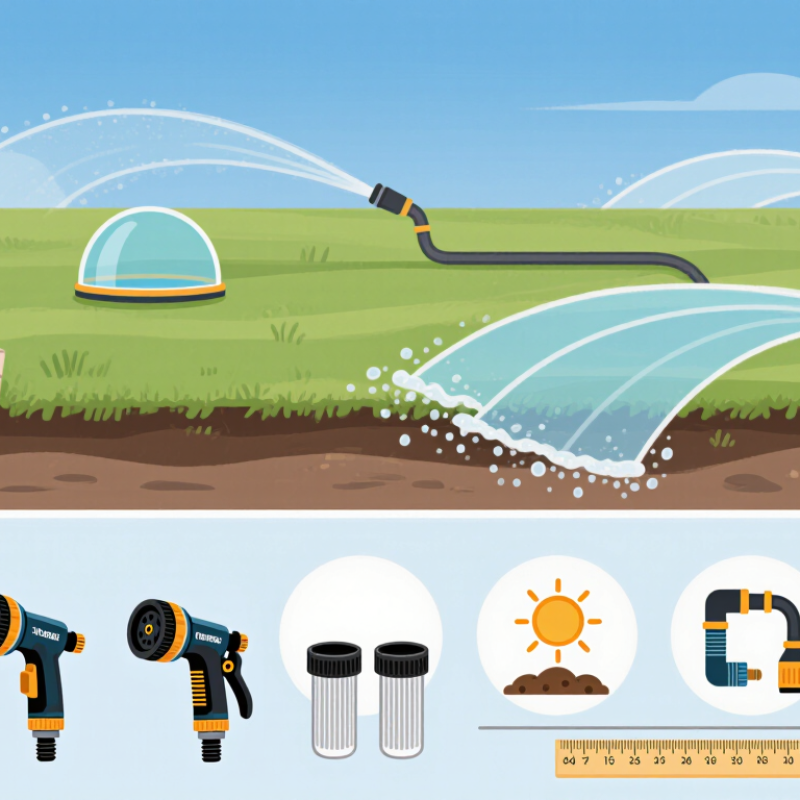
Coverage should be measured, not guessed from a product photograph. Mark the watered area with a tape measure, then check whether the spray reaches corners evenly. The U.S. Environmental Protection Agency’s WaterSense program reports that landscape irrigation uses nearly one-third of residential water, or about 9 billion gallons daily. Small coverage errors can therefore become expensive waste.

Compare flow rate in gallons per minute, but do not judge flow alone. Divide total flow by irrigated area to estimate precipitation rate. Then compare that rate with your soil’s absorption speed and local watering schedule. The Irrigation Association recommends catch-can testing for practical audits. Place identical containers across the spray zone, run the sprinkler, and measure collected water. Uneven readings reveal dry stripes and runoff risks. Five minutes can expose more than a sales chart.

Spray pattern matters when beds have unusual shapes. A full-circle pattern suits open lawns, while quarter-circle and strip patterns reduce overspray near walls. Adjustable patterns offer flexibility, though they can be inconsistent when the adjustment ring moves. I have found that “adjustable” does not always mean precise. ASABE/ANSI S436.1 provides a recognized framework for evaluating sprinkler distribution and performance. Use its principles, but still test your actual pressure, spacing, and wind conditions. A sprinkler that performs well in a laboratory may behave differently beside a hot driveway.

What Materials and Features Determine Sprinkler Durability?

How to Choose the Best Spray Sprinkler in 2026?

What Materials and Features Determine Sprinkler Durability?

A durable spray sprinkler starts with its body material. UV-stabilized engineering plastic resists cracking, corrosion, and soil chemicals. Stainless steel stems add strength around driveways and high-traffic planting beds. However, metal is not automatically better. Poor seals can fail faster than a quality polymer body. The U.S. EPA reports that outdoor irrigation represents nearly 30% of household water use. It also estimates that evaporation and runoff can waste about half of that water.

Look for pressure regulation, a reliable filter, and adjustable spray patterns. Pressure regulation reduces misting when supply pressure rises. A removable filter helps protect the nozzle from grit and mineral particles. Industry testing under ANSI/ASABE S398.1 evaluates sprinkler distribution and performance. That matters because uneven coverage creates dry patches and unnecessary watering. I prefer models with clearly marked adjustment points. Tiny screws are frustrating, especially with wet hands. Durability should include serviceability, not only a strong shell.

Tips: Check the operating pressure before buying. Flush the lateral line before installation. Inspect seals every spring for brittleness. Choose stainless hardware near salty soil or concrete. A practical field test is simple: run the sprinkler for ten minutes and watch for fogging, leaks, and uneven arcs. Performance can disappoint, even when the specifications look impressive.

How to Select, Install, and Maintain the Best Spray Sprinkler

How to Choose the Best Spray Sprinkler in 2026?

How to Select, Install, and Maintain the Best Spray Sprinkler

Choose a spray sprinkler by soil, pressure, coverage, and local wind conditions. A small lawn needs different performance from a narrow garden bed. Check the nozzle’s precipitation rate before buying. Matched precipitation rates help each zone apply water more evenly. The U.S. EPA WaterSense program reports that landscape irrigation can waste up to 50% of outdoor water. That loss often comes from overspray, leaks, and poor scheduling. USGS national water-use estimates also show irrigation remains a major freshwater demand. Efficiency is not a decorative feature.

Installation needs careful measurement. Place the sprinkler head level with the soil surface. Keep spray away from walls, paths, and windows. Test each zone with empty tuna cans or similar containers. Measure water depth after ten minutes. Adjust the run time from real results, not guesswork. I have found that pressure problems can look like bad nozzles. Sometimes, both are involved. That is easy to miss.

Tips: Clean filters and nozzles monthly during heavy use. Replace cracked seals quickly. Watch the spray at sunrise. Wind can reveal hidden overspray. Check coverage after mowing. Grass height changes the pattern. Seasonal adjustment matters, but perfect uniformity is unrealistic. Leave a small margin for observation. A second test often changes the decision.