Leave Your Message

How to Choose a Landscape Irrigation Controller?

Choosing a Landscape Irrigation Controller is not simply a technology decision. It is a water-management decision shaped by climate, soil, plant type, and system design.

The U.S. Environmental Protection Agency reports that outdoor water use can exceed 30% of household consumption. In arid regions, it may reach 60%. The EPA also estimates that WaterSense-labeled weather-based controllers can save an average household nearly 8,800 gallons of water annually. These figures show the potential. They do not guarantee results.

Performance depends on installation and programming.

Dr. Marvin Dukes, an irrigation researcher at the University of Florida, explains, “Smart irrigation controllers use weather data to determine when and how much to irrigate.” That principle sounds simple. Field conditions are not.

A controller connected to rain sensors, flow meters, and reliable weather data can reduce unnecessary watering. However, a poorly placed sensor may read shade while the lawn receives full afternoon sun. Sandy soil may need shorter cycles. Clay soil may need slower application. A beautiful interface cannot correct broken sprinkler heads or excessive pressure.

This guide examines controller types, sensing methods, zoning requirements, installation details, and long-term operating costs. It also considers professional standards from the Irrigation Association and efficiency guidance from the EPA WaterSense program. Market forecasts may report strong growth in smart irrigation, but forecast numbers vary between research firms. That uncertainty deserves attention.

The best Landscape Irrigation Controller is not always the most expensive model. It is the one that matches the site, communicates clearly, and receives regular adjustments. Sometimes, the overlooked settings matter most.
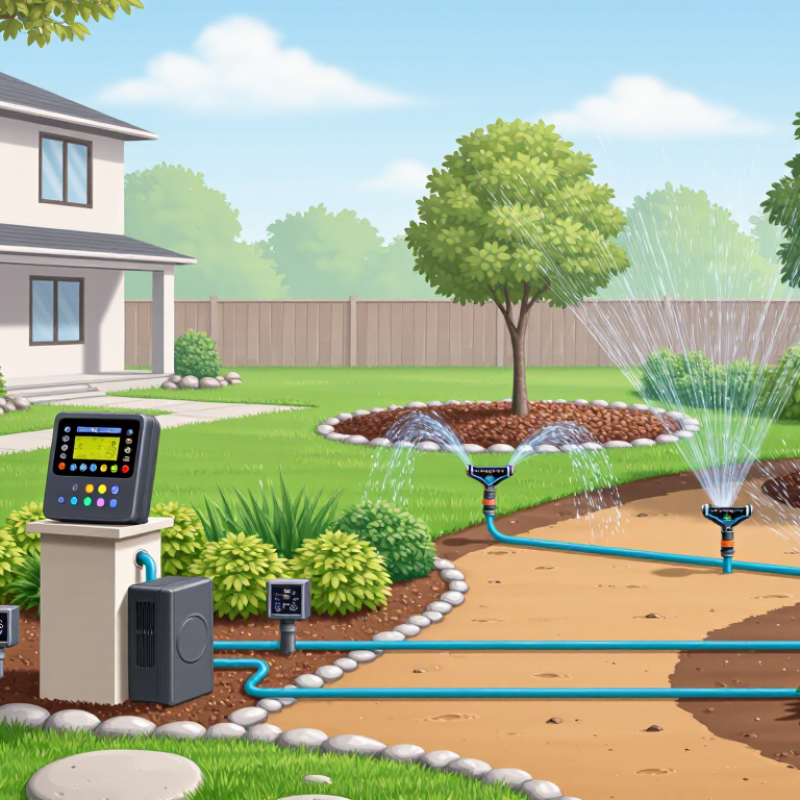
How to Choose a Landscape Irrigation Controller?

Define the Landscape Irrigation Controller’s Core Functions

How to Choose a Landscape Irrigation Controller?

Define the Landscape Irrigation Controller’s Core Functions

A landscape irrigation controller should do more than open valves on schedule. Its core function is precise water delivery. It should control separate zones, adjust run times, pause during rain, and support manual operation.

EPA WaterSense reports that outdoor water use can represent nearly one-third of household consumption. Inefficient irrigation can waste about 50% through runoff, evaporation, and wind. Those figures make basic timing inadequate.

Look for controllers that calculate watering from weather, soil moisture, plant type, and exposure. A reliable unit should record schedules clearly and show valve activity without confusing menus. Flow monitoring is valuable because a sudden change may indicate a broken pipe or blocked sprinkler.

EPA WaterSense estimates that improved irrigation management can save an average household up to 15,000 gallons annually. That is substantial. Yet savings depend on correct setup, not advertising claims.

Field experience also changes the decision. A shaded lawn may need far less water than a sunny flower bed. Sloped ground needs shorter cycles with soaking intervals. Choose a controller with seasonal adjustment, rain delay, and zone-by-zone testing.

I have learned to distrust “automatic” settings when soil conditions are ignored. They are convenient, but not always intelligent.

The controller should simplify professional judgment, not replace it. Test each zone with a measuring cup, inspect runoff, and revise the schedule after observing real plant stress.

Mistakes are normal; unexamined schedules are the real problem.
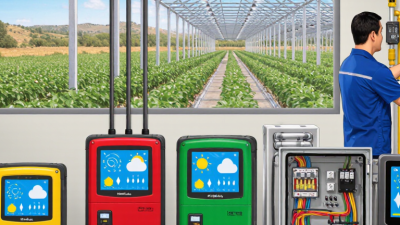
Assess Your Landscape, Water Sources, and Irrigation Zones

How to Choose a Landscape Irrigation Controller?

Start with the landscape, not the controller. Walk the property after watering and mark sunny slopes, shaded beds, lawn areas, and planting zones. A south-facing lawn may need more water than a shaded shrub border. Soil matters too. Sandy soil drains quickly, while clay soil holds water and may cause runoff.

The U.S. Environmental Protection Agency’s WaterSense program estimates that a labeled irrigation controller can save an average household nearly 8,800 gallons of water annually. That saving depends on correct setup, however.

Check your water source before selecting features. Record pressure, flow rate, supply restrictions, and whether rainwater or reclaimed water is available. A weak supply can make several zones run poorly. Divide zones by plant type, sunlight, slope, and emitter or sprinkler output.

Never group thirsty turf with drought-tolerant plants simply because they share one pipe.

The U.S. Geological Survey reported that irrigation represented about 42 percent of U.S. freshwater withdrawals in 2015, showing why accurate scheduling matters.

Choose a controller that can adjust watering by local weather, soil moisture, or seasonal demand. Manual inspection still matters. I have seen sensors installed under tree cover, where readings became misleading.

I also tend to overestimate plant needs during hot weeks. Recheck runoff, wet soil, and stressed leaves after several cycles. A controller is only as reliable as its zones, sensors, and assumptions. Small mistakes remain possible. That is worth admitting.

Compare Controller Types, Features, and Smart Scheduling Options

Choosing a landscape irrigation controller starts with the site, not the screen. Basic timer controllers run fixed cycles, while sensor-based models adjust watering after measuring rain or soil moisture. Weather-based controllers use local temperature, wind, humidity, and rainfall data. The U.S. Environmental Protection Agency’s WaterSense program reports that properly installed smart controllers can reduce irrigation use by about 20 percent. That saving depends on accurate setup.

Compare the number of zones, valve compatibility, flow monitoring, and manual controls. A controller should handle separate lawn, shrub, and drip areas because their water needs differ. Look for seasonal adjustment, rain delays, cycle-and-soak programming, and alerts for unusual flow. The Irrigation Association recommends matching schedules to plant type, soil, slope, and local weather rather than using one routine everywhere. A shaded bed beside a sunny lawn should not receive identical treatment.

Smart scheduling is useful, but it is not automatically intelligent. EPA WaterSense guidance emphasizes correct sensor placement, functioning rain shutoff devices, and regular maintenance. Check whether the controller uses reliable local weather data or depends on a weak connection. Test each zone with a short cycle. Watch for runoff near paved edges. My practical concern is simple: installers can overtrust automation and overlook clogged nozzles or tilted sensors. Even a sophisticated schedule fails when water pressure changes. Allow room for manual correction after storms, heat waves, or new planting.

How to Choose a Landscape Irrigation Controller?

Compare controller types by scheduling flexibility, potential water efficiency, installation complexity, and reliance on sensors or weather data.

Reading the chart: Basic timers are simple to install but offer limited scheduling control. Programmable controllers provide more flexibility, while weather-based and soil-moisture-based smart controllers can improve watering efficiency when correctly installed, configured, and maintained. Scores use a comparative 1–5 scale; higher scores indicate more of the characteristic shown.

Match Controller Capacity with Valves, Sensors, and Power Supply

How to Choose a Landscape Irrigation Controller?

Match the controller’s capacity with the valves, sensors, and available power supply. Begin by counting every irrigation zone, not just the zones used today. A six-valve system needs at least six reliable outputs. Leaving one spare output allows future changes without replacing the controller. Small details matter.

Check the valve voltage and current requirements before installation. A controller may show enough terminals but still lack sufficient output power. Sensors also need compatible connections, such as rain, flow, or soil-moisture inputs. Keep sensor wiring separate from high-voltage cables. This reduces interference and makes troubleshooting easier. A crowded terminal box creates confusion.

The power supply deserves careful attention. Confirm the input voltage, transformer rating, cable length, and outdoor protection. Long cable runs can cause voltage loss, especially with several valves operating together. Use weather-resistant enclosures and follow local electrical requirements. A qualified electrician should inspect mains connections. Safety comes before convenience.

In field inspections, installers often discover that the planned capacity is too tight. I once saw an apparently suitable controller fail when a pump relay and moisture sensor were added. The original calculation missed their combined load. That mistake was avoidable. Choose capacity with a practical margin, and record each valve, sensor, and power requirement before buying. A neat schedule can prevent an expensive replacement.

How to Choose a Landscape Irrigation Controller? - Match Controller Capacity with Valves, Sensors, and Power Supply

Landscape Application Typical Number of Zones Valves per Active Zone Estimated Solenoid Load Required Sensor Inputs Recommended Controller Capacity Power Supply Guideline Selection Notes
Small residential garden 4–6 zones 1 valve Approximately 0.25–0.40 A at 24 VAC per active valve 1 rain or soil-moisture sensor 24 VAC transformer rated at approximately 0.75 A or higher Suitable for lawns, planting beds, and a small drip-irrigation area. Allow one unused station for future expansion.
Medium residential property 8–12 zones 1 valve Approximately 0.25–0.40 A per active valve Rain sensor; optional flow or soil-moisture sensor 24 VAC transformer rated at approximately 1.0 A or higher Choose a model with seasonal adjustment, non-volatile program memory, and separate start times for different irrigation areas.
Large residential property 13–24 zones 1–2 valves, subject to hydraulic design Approximately 0.40–0.80 A when two valves operate together Rain sensor plus flow or soil-moisture sensor 24 VAC transformer rated at approximately 1.0–1.5 A, based on the maximum simultaneous load Confirm that the controller can operate the master valve and zone valve at the same time without exceeding its output rating.
Small commercial landscape 12–32 zones 1 valve per zone; multiple zones may require scheduling coordination Approximately 0.25–0.40 A per energized valve Rain, flow, pressure, and weather-based sensor options 24 VAC transformer commonly rated at 1.5 A or higher; verify the total controller output rating Prioritize alarm reporting, flow monitoring, master-valve control, and a reliable backup for stored programs.
Public park or sports turf 24–48 zones 1 valve per zone, with hydraulic sequencing Typically 0.25–0.40 A per solenoid; higher total demand may occur with a master valve Rain, flow, pressure, weather, and pump-start control Use a dedicated 24 VAC supply sized for the controller, master valve, pump relay, and maximum permitted simultaneous outputs Use separate hydraulic zones for turf, planting beds, and high-flow areas. Confirm pump-relay compatibility before installation.
Drip-irrigation planting beds 2–12 zones 1 valve; pressure regulation is normally required Approximately 0.25–0.40 A per active valve Rain or soil-moisture sensor; optional flow sensor 24 VAC transformer rated for the controller and the maximum number of simultaneous valves Use shorter, more frequent programs and verify that filtration, pressure regulation, and flushing requirements are met.
Mixed-use landscape with pump 8–24 zones 1 valve plus master valve or pump relay Approximately 0.50–0.80 A when a zone valve and master valve operate together Flow sensor, pressure sensor, rain sensor, and pump-start interface Use a transformer with sufficient capacity for the zone valve, master valve, and controller outputs; follow the pump-relay requirements Do not connect a pump motor directly to a low-voltage controller output. Use a properly rated relay or starter.
Remote or unreliable-power site 4–24 zones 1 valve per active zone Approximately 0.25–0.40 A per active valve Rain, flow, soil-moisture, and power-failure monitoring Use a stable 24 VAC supply or a correctly sized solar and battery system designed for the site climate Calculate battery autonomy, valve operating frequency, communication energy use, and winter conditions before selecting the power system.
Expansion-ready installation Current system uses 6–12 zones 1 valve per active zone Based on the maximum number of valves and auxiliary outputs operating together At least 1 sensor input, with expansion capability Size the transformer for the planned future load, not only the initial installation Keeping spare stations and spare power capacity reduces replacement costs when new planting areas or sensors are added.

Evaluate Installation, Maintenance, Weather Response, and Future Expansion

Choosing a landscape irrigation controller requires more than counting stations. Installation conditions often determine long-term reliability. Confirm cabinet access, electrical capacity, sensor wiring, and zone compatibility before purchase. Place rain or weather sensors in open areas, not beneath roof edges or dense trees. I have seen accurate controllers fail because sensors were poorly positioned.

Maintenance should be simple enough for seasonal inspections. Look for clear schedules, removable terminals, manual testing, and fault alerts. The U.S. Environmental Protection Agency estimates that weather-based controllers can save an average home nearly 8,800 gallons of water annually. That saving disappears when clogged nozzles or broken valves remain unnoticed. Set a monthly inspection routine, then review actual soil moisture. The schedule may still be wrong.

Weather response deserves careful evaluation. A controller should adjust watering through evapotranspiration data, rainfall, temperature, and freeze conditions. The FAO AQUASTAT database reports that agriculture accounts for about 70% of global freshwater withdrawals, reinforcing the value of precise irrigation management. However, local weather data can be imperfect. Check whether the controller uses nearby measurements or distant regional data. Test rain delays after real storms.

Future expansion is easy to underestimate. Reserve stations, conduit space, transformer capacity, and communication options for later zones. A small landscape can gain planting beds, trees, or drainage changes within a few years. Select open scheduling capabilities rather than a tightly limited system. I prefer modest spare capacity. It costs less than replacing the controller early.