Why Are Irrigation Heads Essential for Efficient Water Management?
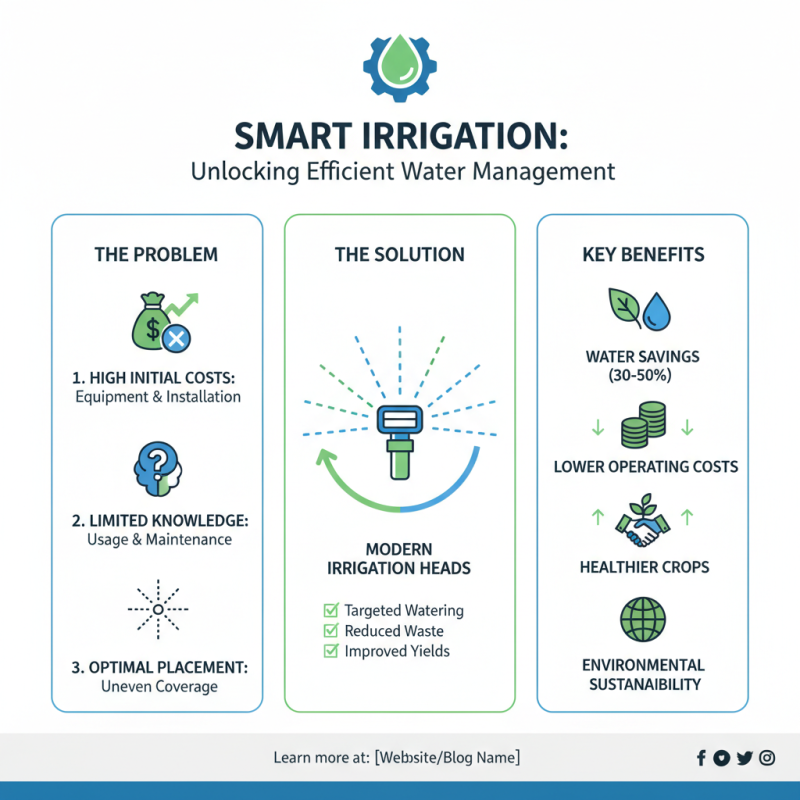
Efficient water management is a crucial aspect of agriculture. Irrigation Heads play a significant role in this process. According to the Food and Agriculture Organization (FAO), improper irrigation can waste up to 50% of water resources. With the global population increasing, the demand for water-efficient farming techniques is urgent.
Irrigation Heads help in directing water precisely where it is needed. They can improve the distribution and reduce runoff. A study by the United States Department of Agriculture (USDA) highlighted that precise irrigation could increase crop yield by 30%. Yet, many farmers still overlook this technology, leading to inefficiencies.
While the benefits are apparent, the implementation can be challenging. Some regions lack access to proper irrigation systems. Others may struggle with maintenance. Reflecting on these issues is vital for sustainable farming practices. Properly utilizing Irrigation Heads could save resources and improve productivity, but barriers still exist within the industry.
The Role of Irrigation Heads in Modern Agriculture
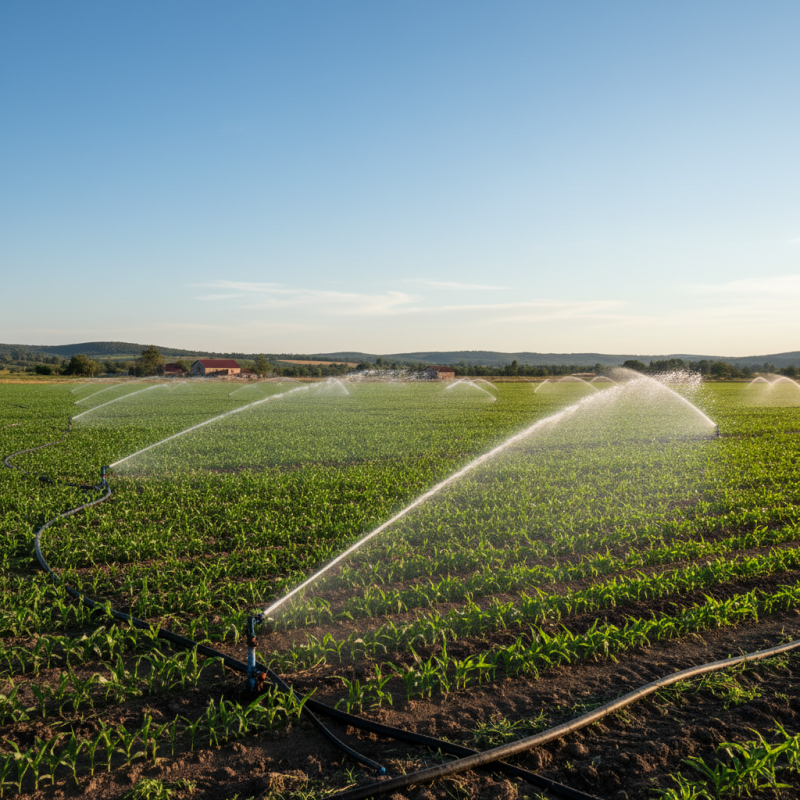
Irrigation heads play a pivotal role in modern agriculture. They effectively distribute water across varying landscapes. By ensuring uniform water flow, they enhance crop health and yield. Farmers depend on these essential tools to manage their resources efficiently. A well-designed system minimizes waste, conserving valuable water.
However, not all farmers utilize them correctly. Some may overlook their maintenance, leading to clogged systems or uneven watering.
The design of irrigation heads can be a game-changer. Adjustable heads can adapt to different crop needs. Different plants thrive under specific moisture levels. It is crucial for growers to understand these nuances. Yet, a common challenge is the misunderstanding of water requirements. Over-irrigation can be as harmful as under-irrigation. The balance is delicate and requires continuous monitoring.
Considering environmental factors is also essential. Soil types vary dramatically, affecting water retention. Irrigation heads may need adjustments based on these conditions. Awareness of local climate can inform better irrigation practices. While technology has advanced, some farmers still struggle with implementation. Reflection on personal experiences can foster improvements. Embracing both traditional knowledge and modern techniques might yield the best results.
Types of Irrigation Heads and Their Uses
Irrigation heads play a crucial role in effective water management. They distribute water efficiently across agricultural fields. Various types of irrigation heads can optimize water use. Each type has specific applications based on crop needs and soil conditions.
Sprinkler heads are among the most common. They mimic natural rainfall. Many farmers rely on them to irrigate large areas quickly. According to industry studies, they can save up to 25% more water than other methods.
Drip irrigation heads offer precise water delivery. They minimize evaporation and runoff. This makes them suitable for high-value crops. However, they can be more complex to install and maintain.
Surface irrigation heads are also widely used. They flood fields and are less efficient. Many farmers still choose them due to lower initial costs. Yet, over time, they may waste significant water resources.
Farmers must consider long-term impacts. Evaluating the right type of irrigation head is essential for sustainability. Making the wrong choice can lead to ineffective water management and resource depletion.
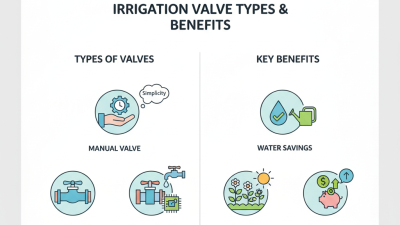
Benefits of Efficient Water Management with Irrigation Heads
Efficient water management is crucial in agriculture. Irrigation heads play a vital role in achieving this. According to a report by the Food and Agriculture Organization, precise water application can boost crop yield by up to 25%. This highlights the importance of using well-designed irrigation heads.
Irrigation heads can distribute water evenly, reducing waste. They ensure that each plant receives adequate moisture. A study showed that farmers who utilize advanced irrigation techniques can save up to 50% more water. This is essential in areas facing drought conditions.
Tip: Regularly check your irrigation system. Blockages can lead to uneven distribution, reducing efficiency.
Proper maintenance is necessary for optimal performance. Some may overlook the calibration of their irrigation heads. This can lead to excessive water use and poor crop growth.
Tip: Track your water usage. Noticing patterns can help identify inefficiencies in the system. Adjusting your irrigation strategy may yield better results.
Benefits of Efficient Water Management with Irrigation Heads
Best Practices for Maintaining Irrigation Heads
Irrigation heads play a crucial role in optimizing water distribution. Maintaining them is key to preventing wastage and ensuring crops receive the right amount of water. Regular checks can help avoid clogs caused by dirt and debris. A dirty head can lead to uneven water flow, making your irrigation less effective.
**Tip:** Clean your irrigation heads at least once a month. This helps prevent buildup and maintains consistent pressure.
Inspecting for leaks is just as important. Even a small leak can waste a significant amount of water over time. Use a simple visual inspection technique; look for wet spots in the field. If you find any, act quickly to repair the issue.
**Tip:** Monitor your irrigation system regularly. Set a schedule to check for wear and tear. This proactive step can save you money and resources. Neglecting maintenance can lead to costly repairs later.